Maintaining reliable product quality is essential for manufacturers that want to build customer trust, reduce waste, and improve production efficiency. In printing and web-processing environments, quality control can become particularly challenging because production lines often operate continuously and at high speeds.
Traditional inspection methods frequently rely on samples or manual visual checks. While these methods can provide useful information, they may not reveal every problem occurring throughout a production run. A defect can appear between two inspection points and remain unnoticed until a later stage.
Automated inspection provides manufacturers with another layer of quality assurance. By continuously observing production and analyzing visual information, these systems can help production teams identify potential problems earlier and make better-informed decisions.
The Role of Quality Assurance in Manufacturing
Quality assurance is more than identifying defective products at the end of production. It involves creating processes that help maintain consistent quality throughout manufacturing.
For printing operations, this can include monitoring graphics, colors, registration, surface appearance, and other characteristics that influence the finished product.
When quality monitoring is integrated into production, manufacturers have more opportunities to identify problems before they become widespread.
Limitations of Manual Inspection
Manual inspection remains an important part of many manufacturing processes. Experienced operators can recognize unusual conditions and use their knowledge to make production decisions.
However, continuously examining fast-moving material can be difficult.
Operators may need to monitor production for long periods, and human attention naturally has limitations. Sampling also means that some sections of material are not directly examined.
Automated inspection can complement manual checks by providing continuous observation.
How Automated Inspection Supports Quality Control
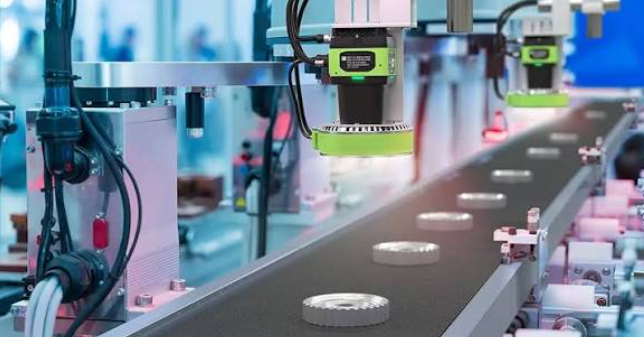
Automated inspection typically uses cameras to capture images of material as it moves through a production line.
Specialized software then processes the images and evaluates them against an appropriate reference or predefined quality criteria.
When the system identifies a potential problem, it can provide an alert to the operator.
This allows quality control to become an active part of production rather than something performed only after manufacturing has finished.
Identifying Common Quality Problems
Printing and web-processing operations can experience many different types of defects.
These may include:
- Missing print
- Spots
- Streaks
- Smudges
- Registration differences
- Unwanted marks
- Surface imperfections
- Color variations
- Other visual inconsistencies
The exact defects that can be identified depend on the inspection setup, material, production conditions, and software configuration.
For this reason, manufacturers should define their quality requirements before configuring an automated system.
Why Early Detection Matters
The timing of defect detection can have a significant effect on production efficiency.
If a problem appears and remains unnoticed, the production line may continue operating while additional material becomes affected.
An automated inspection process can help shorten the period between a defect appearing and the operator becoming aware of it.
This gives production personnel an opportunity to investigate the source of the problem and determine whether corrective action is necessary.
Controlling Production Waste
Waste reduction is an important consideration for modern manufacturers.
Materials, ink, energy, labor, machine time, and downstream processing all contribute to production costs. When defective material is produced unnecessarily, these resources may be wasted.
Continuous monitoring can help limit the impact of certain problems by providing earlier information.
If an issue is detected quickly, operators may be able to address it before a larger quantity of material is affected.
Improving Production Consistency
Consistency is especially important for printed products that represent a brand or customer specification.
Packaging, labels, and other printed materials often need to maintain a uniform appearance throughout a production order.
Automated inspection can provide continuous visibility across the production process, helping identify differences that may not be discovered through occasional sampling.
This can support a more stable quality-control environment.
Using Technology Alongside Human Expertise
Automated inspection should not be viewed as a complete replacement for production personnel.
Technology can continuously monitor material and identify potential differences, but operators still play an important role in interpreting results.
When an alert is generated, a skilled operator can examine the situation, investigate the likely cause, and decide what action should be taken.
This combination allows technology to handle repetitive monitoring while human expertise remains focused on analysis and decision-making.
Importance of Imaging Quality
The effectiveness of automated inspection depends heavily on the quality of the images being analyzed.
Cameras need to capture clear and consistent information as the material moves through production.
The appropriate setup depends on factors such as material width, production speed, inspection resolution, and surface characteristics.
Camera placement should also provide a stable view of the inspection area.
The Importance of Controlled Lighting
Lighting conditions can significantly affect visual inspection.
Reflections, glare, shadows, and inconsistent illumination may create differences in captured images that are not actual product defects.
Different materials can also respond differently to lighting. Glossy films, paper, foil, and textured surfaces may require different approaches.
A carefully designed lighting arrangement helps provide consistent images for software analysis.
Inspection Software and Reference Standards
Cameras provide images, but software determines how those images are interpreted.
Inspection software can compare current production images against an approved reference or predefined criteria.
The inspection parameters need to reflect actual product requirements.
If the system is configured too sensitively, operators may receive unnecessary alerts. If it is configured too loosely, important defects may go unnoticed.
Finding the appropriate balance is therefore an important part of implementation.
Integrating Inspection Into Existing Processes
Manufacturers often need to introduce automated inspection into an existing production line.
The physical installation should consider available space, material movement, operator access, lighting, and maintenance requirements.
The software should also fit into the existing workflow.
Inspection alerts should be easy to understand so operators can respond without unnecessary delays.
Businesses interested in strengthening their quality-control processes can explore quality inspection systems as part of a broader manufacturing quality strategy.
Making Better Use of Inspection Data
Inspection systems can provide information that supports more than immediate defect detection.
When inspection results are recorded over time, manufacturers can identify recurring patterns.
For example, if a particular defect occurs repeatedly, the production team may investigate machine condition, material handling, printing settings, or other process factors.
This creates an opportunity to use quality information for continuous improvement.
Instead of simply identifying defective material, manufacturers can work toward understanding why problems occur.
Supporting Preventive Quality Management
A strong quality strategy aims to prevent recurring problems rather than repeatedly correcting them.
Inspection data can help production teams identify areas that require attention.
If certain defects appear frequently, manufacturers can investigate whether changes to maintenance schedules, operating procedures, materials, or machine settings could reduce their occurrence.
This approach can improve production reliability over time.
Choosing an Appropriate Inspection Solution
Different manufacturing environments require different inspection approaches.
Before selecting a system, businesses should consider:
- Type of material
- Production speed
- Inspection width
- Expected defect types
- Required resolution
- Lighting conditions
- Software capabilities
- Integration requirements
- Operator workflow
- Maintenance needs
A suitable system should match the actual production environment rather than simply offering features that are not required.
Operator Training and System Maintenance
Training is an important part of successful implementation.
Operators should understand how inspection alerts work, how potential defects should be reviewed, and what steps should be taken when problems are identified.
The system itself should also be maintained regularly.
Camera positioning, lighting, software settings, and other components may require periodic checks. Changes in materials or product designs may also require inspection parameters to be updated.
Applications in Printing and Web Processing
Automated quality inspection can support a variety of applications.
Printing companies may use inspection technology for packaging, labels, flexible materials, and other printed products.
Web-processing operations can also benefit from continuous monitoring where surface quality and consistency are important.
The exact inspection requirements vary according to the product, making application-specific configuration essential.
Frequently Asked Questions
1. What is the purpose of automated quality inspection?
The main purpose is to continuously monitor production and identify potential quality problems. It can provide earlier information to operators and support more consistent manufacturing.
2. Can automated inspection completely replace manual quality control?
No. Automated inspection can handle continuous visual monitoring, but human operators remain important for interpreting results, investigating causes, and making production decisions.
3. How can inspection systems support waste reduction?
By identifying potential problems earlier, automated inspection can give operators an opportunity to correct issues before larger quantities of material are affected. This may help reduce unnecessary waste and rework.
Conclusion
Automated inspection can strengthen quality assurance by bringing continuous monitoring directly into the manufacturing process. Instead of relying exclusively on samples or final checks, manufacturers can use cameras and image-processing software to observe production and identify potential problems earlier.
The benefits can include improved consistency, better production visibility, reduced waste, and stronger process control. However, successful implementation depends on appropriate equipment, reliable imaging conditions, suitable software configuration, operator training, and regular maintenance.
When automated inspection is combined with human expertise and a structured quality-management strategy, it can become an effective tool for maintaining dependable production standards and supporting continuous improvement.